
A good styling day can make your hair look smooth, shiny, and beautifully polished. The problem is that frequent exposure to hot tools can gradually leave strands dry, brittle, frizzy, and more prone to breakage. Learning how to protect hair from heat is therefore less about giving up your favorite blow dryer or flat iron and more about using them in a smarter way.
The good news is that you don’t need a complicated routine. A few simple changes-such as using a heat protectant, lowering the temperature, allowing some air-drying time, and avoiding repeated passes with hot tools-can make your styling routine much gentler. Dermatologists also recommend limiting excessive heat and using low or medium settings whenever possible.
Why Heat Can Damage Your Hair
Hair may look strong, but the visible strand is not living tissue. Repeated high heat can affect its outer surface and internal protein structure, making it look rougher and feel less flexible over time.
Research on thermal styling has found that higher temperatures can cause structural changes to hair keratin and increase breakage, particularly when hair is repeatedly exposed to hot flat irons.
Blow-drying can also contribute to surface damage, especially when very hot air is held close to the hair for extended periods. One study comparing drying conditions found that hair-surface damage tended to increase as temperature increased. Interestingly, the researchers also found that a dryer used farther from the hair with continuous movement caused less damage than very hot, concentrated airflow.
That means the goal isn’t simply “never use heat.” It’s to reduce unnecessary exposure.
How to Protect Hair From Heat Every Time You Style
The easiest way to build a heat-safe routine is to make each styling session a little more deliberate.
Start With a Heat Protectant
A heat protectant for hair should be one of the first products you reach for before using a blow dryer, curling iron, or flat iron.
Some leave-in conditioners are specifically formulated to provide heat protection, and the American Academy of Dermatology recommends looking for products that identify themselves as heat protectants when styling with heat.
Apply the product according to its label and distribute it through the areas that will actually be exposed to heat. Don’t assume that using a large amount provides extra protection. More product isn’t automatically better.
Also, remember that a heat protectant helps reduce styling stress; it doesn’t make hair completely immune to high temperatures.
Let Your Hair Air-Dry Partway
One of the simplest ways to reduce heat exposure is to avoid using a blow dryer on soaking-wet hair for the entire drying process.
After washing, gently remove excess water with a towel or T-shirt instead of vigorously rubbing your hair. Then allow it to air-dry for a while before finishing with a dryer.
The American Academy of Dermatology specifically recommends allowing hair to partially air-dry and reducing how often you blow-dry it.
This small habit can shorten the amount of time your hair spends under direct heat.
Choose a Lower Temperature
Turning the heat all the way up may seem like the fastest route to sleek hair, but the highest setting isn’t automatically the best setting.
Dermatologists recommend using low or medium heat whenever possible.
Start with the lowest setting that can still give you the result you want. If your hair is fine, fragile, bleached, or already dry, being especially conservative with heat makes sense.
For thicker or coarser hair, you may occasionally need more heat to achieve a particular style. Even then, avoid using the maximum temperature simply because the tool offers it.
The goal is enough heat to style-not as much heat as possible.
Keep the Dryer Moving
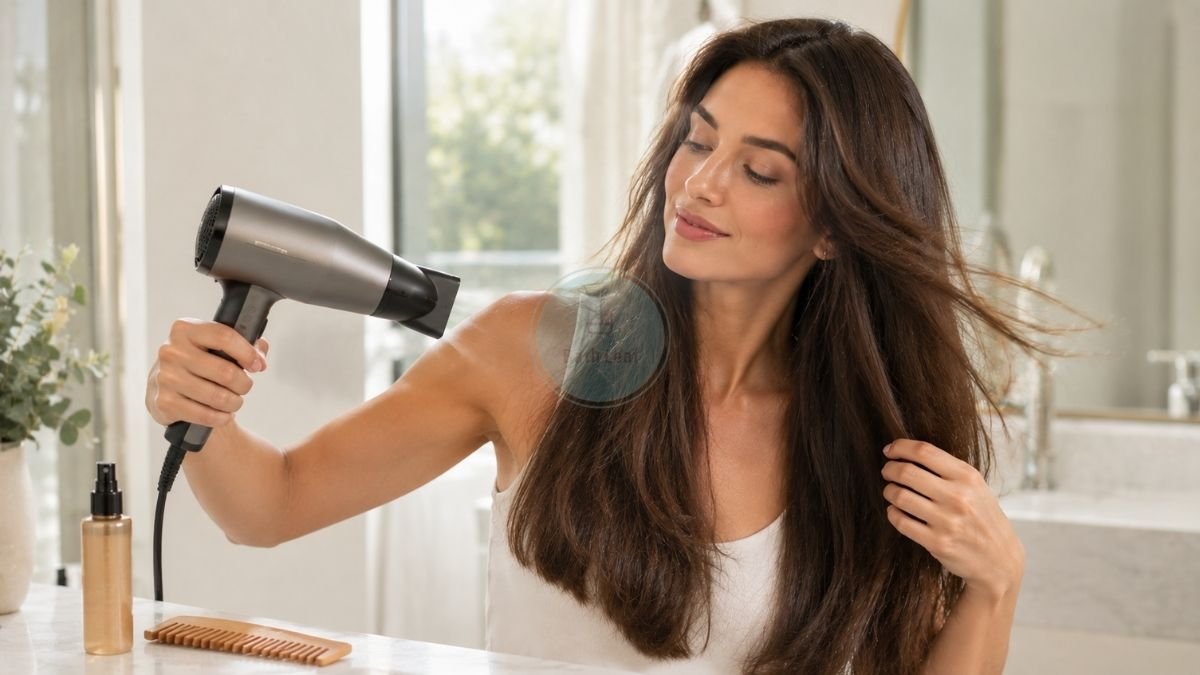
When you’re blow-drying, don’t park the dryer in one spot.
Keep it moving steadily over the hair and avoid holding extremely hot air directly against one section for too long. Research has found that distance and continuous movement can make a meaningful difference in reducing heat-related surface damage.
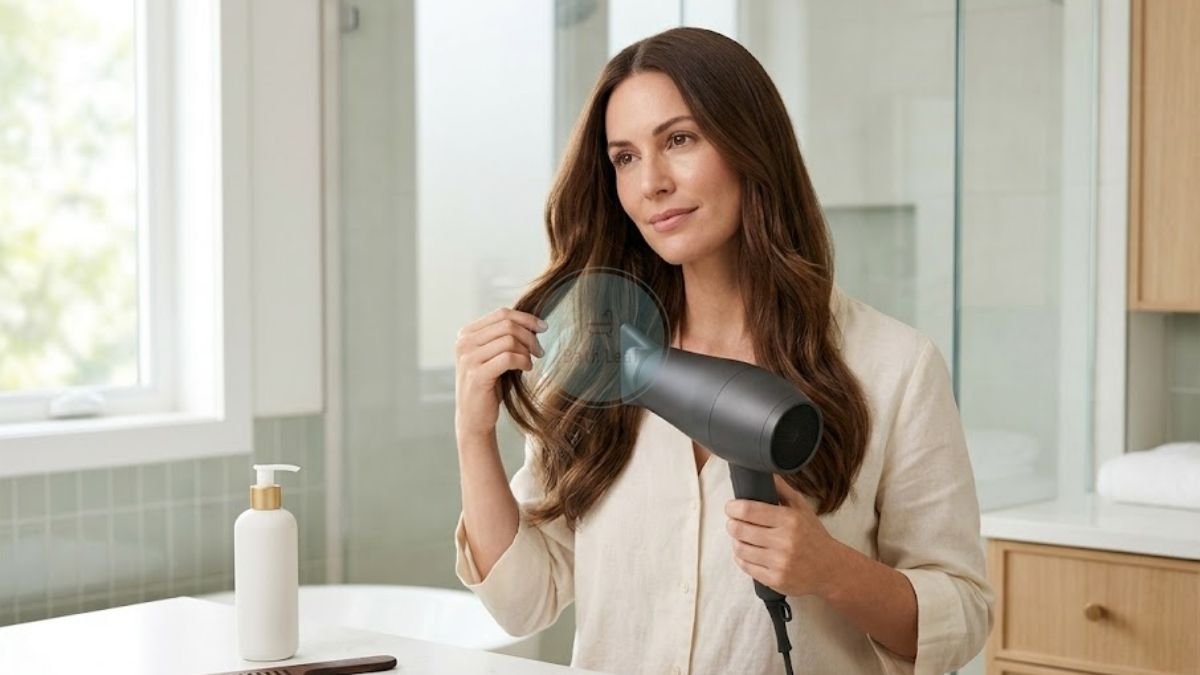
A concentrator nozzle can also help direct airflow more precisely, which may make it easier to smooth the hair without repeatedly blasting the same area.
Be Careful with Flat Irons and Curling Irons
Flat irons and curling irons create much more concentrated heat than a typical blow dryer, so technique matters.
Always use a flat iron on dry hair, and choose a low or medium temperature when possible. The American Academy of Dermatology recommends limiting flat-iron use and avoiding frequent exposure to excessive heat.
Try to make one controlled pass instead of repeatedly going over the same section.
With a curling iron, avoid leaving the tool clamped on the hair for longer than necessary. Once the curl is formed, release it instead of holding it against the strand simply to make it “last longer.”
It can be tempting to keep going over a section that doesn’t look perfect. However, several quick passes can add up to considerably more heat exposure than one careful pass.
Protect Hair From Heat When Your Hair Is Already Damaged
If your hair is already dry, brittle, bleached, or breaking, your styling routine needs even more care.
Signs of significant damage can include:
- Rough-feeling lengths
- Excessive frizz
- Split or visibly worn ends
- Increased breakage
- Hair that feels unusually dry
- Loss of softness or flexibility
In this situation, consider using hot tools less often rather than simply adding more styling products.
A moisturizing conditioner after every shampoo can help keep strands easier to manage, while a leave-in conditioner may help reduce frizz and make detangling easier. The AAD notes that leave-in conditioners can be particularly useful for long, dry, curly, color-treated, or heat-styled hair.
Sometimes the best heat-damage strategy is giving your hair a few styling-free days.
Don’t Ignore Your Hair Before You Apply Heat
Heat protection doesn’t begin when you pick up your styling tool. It starts in the shower.
Use a conditioner after shampooing, especially through the lengths and ends. When your hair is wet, handle it gently because wet hair can be more vulnerable to breakage. The AAD recommends gentle detangling and, for many hair types, starting at the ends before gradually working upward.
After washing, avoid rough towel drying. Instead, gently squeeze or wrap the hair to absorb water.
These steps don’t replace a heat protectant, but they help create a healthier baseline before you start styling.
Your Hair Type Matters
There’s no single heat-styling routine that works perfectly for everyone.
Fine or Fragile Hair
Fine hair can become weighed down easily, so choose lightweight conditioning and heat-protective products. Keep temperatures moderate and avoid repeatedly styling the same sections.
Thick or Coarse Hair
Thicker hair may take longer to dry and style. Divide it into manageable sections so you don’t have to repeatedly pass a hot tool over large areas.
Curly or Coily Hair
Focus on moisture and gentle handling. Curly and coily textures can be especially vulnerable to breakage, so minimizing unnecessary heat and maintaining conditioning are important parts of a healthy hair routine.
Color-Treated Hair
Bleached and chemically processed hair already has additional structural stress, so frequent high-heat styling may be particularly hard on it. Keep heat exposure as low as practical and give your hair regular breaks.
Read also: Glass Hair Care Routine for Smooth, Shiny, Healthy Hair
Common Mistakes That Make Heat Damage Worse
Even people who use heat protectant can accidentally create too much stress.
One common mistake is using a very high temperature because the tool heats up quickly. Another is repeatedly running a flat iron over the same section until it looks perfectly smooth.
Blow-drying hair while holding the dryer extremely close is another problem. Keeping some distance and using continuous movement can reduce concentrated exposure.
It’s also easy to overlook frequency. Styling at a moderate temperature every day can still add up over time. Dermatologists recommend limiting heat styling rather than assuming a lower setting makes unlimited use harmless.
Finally, don’t forget the basics: conditioner, gentle detangling, and regular breaks from hot tools.
A Simple Heat-Safe Hair Routine
You don’t need ten products to build a better routine. A practical approach might look like this:
Step 1: Wash your hair according to your scalp and hair type.
Step 2: Apply conditioner through the lengths, especially the ends.
Step 3: Gently remove excess water without aggressive towel rubbing.
Step 4: Apply a heat-protective product according to its directions.
Step 5: Let your hair partially air-dry when practical.
Step 6: Blow-dry using a low or medium setting and keep the dryer moving.
Step 7: If using a flat iron or curling iron, make sure the hair is dry and use the lowest effective temperature.
Step 8: Finish with a small amount of smoothing or shine product if needed.
The routine is simple by design. Consistency matters more than having a shelf full of products.
Frequently Asked Questions
Can heat protectant completely prevent heat damage?
No. A heat protectant can help reduce the effects of thermal styling, but it does not make hair invulnerable to high temperatures. Using appropriate heat settings and limiting styling frequency still matters.
Is air-drying always better than blow-drying?
Not necessarily in every situation. Blow-drying can cause surface damage, particularly with excessive heat, but research has also found that very prolonged wet exposure isn’t automatically harmless. A practical middle ground is to gently remove excess water and use a dryer at a reasonable distance and temperature when needed.
What temperature should I use on my flat iron?
There isn’t one temperature that is ideal for every person or hair type. Start with the lowest setting that can achieve the desired result and avoid repeatedly passing over the same section. Dermatologists recommend low or medium heat rather than excessive temperatures.
How often can I use hot tools?
There is no single frequency that is perfect for everyone, but less frequent heat styling generally means less cumulative exposure. The AAD recommends limiting the use of blow dryers, flat irons, and curling irons to reduce damage.
Can damaged hair be repaired completely?
Hair that has already been damaged cannot simply return to its original condition because the visible hair shaft is nonliving. However, a gentler routine can help reduce further damage and improve the way the hair looks and feels. Severely damaged ends may ultimately need trimming.
Conclusion
Learning how to protect hair from heat doesn’t mean giving up the styles you love. It means making those styling sessions more intentional: use a suitable heat protectant, start with a lower temperature, let your hair partially air-dry, keep your dryer moving, and avoid repeated passes with hot tools. Just as importantly, support your hair between styling sessions with regular conditioning and gentle handling. Over time, these small habits can help your hair look smoother, softer, and healthier while reducing the unnecessary stress that comes with frequent heat styling.